
FTC Disclosure: Delicious Obsessions may receive comissions from purchases made through links in this article. As an Amazon Associate I earn from qualifying purchases.Read our full terms and conditions here.

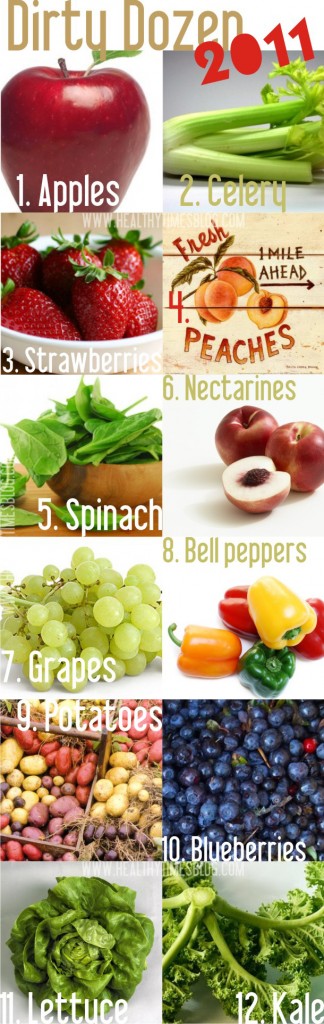
Do you know all of the items on the Dirty Dozen list? I don’t, and the list changes, based on the most recent studies. In 2010, celery topped the list. In 2009, peaches held the number one spot. In 2011, it’s been apples who have held the title of the most chemically contaminated produce. If you don’t already know, the Dirty Dozen (and the Clean 15) is a report that is published each year by the Environmental Working Group (EWG). They are a non-profit, focused on public health. They test produce for chemical and pesticide residue and then issue their list based on their findings.
Why am I publishing this now, when it’s almost time for the 2012 list to come out? Well, it’s because recently, I have heard the same comment over and over – “eating healthy is so expensive”. Well, let’s face it. Eating, period, is expensive nowadays. Food prices have continued to go up, while our paychecks have stayed the same, or in some unfortunate cases, have disappeared.
Well, there are a couple simple tips that I always tell people:
1. Buy organic varieties of the Dirty Dozen, and if you need to, buy commercial produce for everything else.
2. Spend your money in areas where you’ll get your biggest nutritional bang for your buck – grass-fed meats, pastured poultry and eggs, and grass-fed (raw if possible) dairy. These are the items that are worth spending the money on.
Check out one of my past posts for more tips on how to eat real food on a budget. You can also print out a pocketbook size version of the EWG’s Shopper Guide to keep handy when you’re buying your groceries.
For now, here’s 2011’s Dirty Dozen list, courtesy of the Healthy Times Blog.
Delicious Obsessions is a participant in the Amazon Services LLC Associates Program, an affiliate advertising program designed to provide a means for us to earn fees by linking to Amazon.com and affiliated sites.Read our full terms and conditions here.
2 Comments